
Udyogini Logo
UDYOGINI
Where We Work
Udyogini's longest presence

Madhya Pradesh

Strengthening tribal farm, value-chain, climate, and enterprise livelihoods across central India

The Context

Madhya Pradesh is centrally located with forests, fertile plains, rivers, biodiversity, agriculture, livestock, and a significant tribal population in eastern and southern districts.

Udyogini works across Dewas, Anuppur, Dindori, and Mandla through value-chain development, livelihood capacity building, climate resilience, and enterprise support.

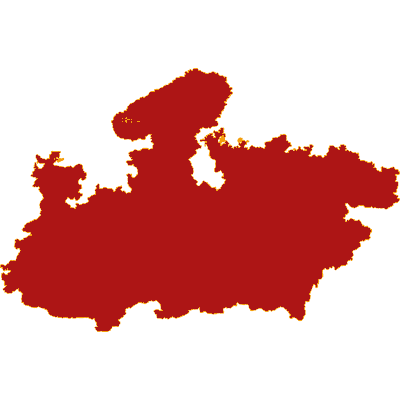
Madhya Pradesh map
Longest

Presence

4

Districts

10

Blocks

Tribal women farmers

Focus

On the Ground

Where We Work in Madhya Pradesh

DewasAnuppurDindoriMandla

Dewas

A Malwa Plateau district with fertile black cotton soil, soybean, wheat, gram, maize, road connectivity, and water-conservation priorities.

Blocks

Sonkatch

An agricultural block with fertile black soil, irrigated and rain-fed farming, livestock, and productivity-focused livelihood work.

Dewas

A mixed urban-rural block where agriculture, industry, transport, and market connectivity support trade and farm livelihoods.

Anuppur

An eastern Madhya Pradesh district with forests, hills, river valleys, tribal communities, agriculture, forestry, livestock, and mining-linked livelihoods.

Blocks

Kotma

A block with forested and agricultural landscapes, rural settlements, mining activity, paddy, maize, pulses, livestock, and forest produce.

Dindori

A predominantly tribal district with dense forests, rolling hills, river systems, agriculture, livestock, minor forest produce, and rich biodiversity.

Blocks

Amarpur

A rural forested block with tribal households, paddy, maize, small millets, forest resources, livestock, nutrition, and empowerment priorities.

Bajag

A forested hill block with scattered tribal villages, rain-fed agriculture, paddy, maize, pulses, forest produce, and livestock.

Karanjia

A hilly forest-rich block where agriculture, forest produce, livestock, biodiversity, and community-based programmes shape local work.

Mandla

A forested, tribal district in the Narmada landscape where agriculture, forestry, livestock, eco-tourism, and natural resource management are important.

Blocks

Mawai

A forested tribal block with hilly villages, rain-fed paddy, maize, pulses, forest produce, livestock, education, health, and nutrition needs.

Narayanganj

A block of agricultural plains and forest areas with paddy, horticulture, livestock, fertile land, water resources, and farmer capacity building.

Niwas

A rural forested block with a large tribal population, agriculture, livestock, forest produce, biodiversity, and sustainable community development.

Current Products & Enterprises

A Diversified Basket

Potato and garlic
Oilseeds
Millets
Wheat
Pulses
Backyard poultry
Mushroom
Vegetables
Solar fencing
Agri-enterprises
Our Approach

Areas of Focus

1

Value Chain Development

Disease-free potato and garlic cultivation, oilseed, millet, wheat, and pulse production systems with aggregation and processing.

2

Livelihood and Capacity Building

Input-cost reduction, IPM/INM, livestock, backyard poultry, mushroom, and vegetable cultivation for rural tribal women farmers.

3

Climate Change

Solar fencing and sustainable water approaches for crop protection, water savings, and climate-resilient production.

4

Entrepreneurship Development

Individual support, agri-product enterprises, agri-machinery enterprises, input enterprises, shade nets, solar dryers, mills, and testing units.

Programme Detail

Current Interventions

Value Chain Development

Niwas, Mawai, Narayanganj, Karanjia, and Kotma blocks

Improved production systems for disease-free potato and garlic, high-quality oilseed, millet, wheat, and pulse cultivation.

  • 216 farmers adopted disease-free garlic and potato seed
  • 27.5 MT potatoes and 14.6 MT garlic aggregated and processed
  • More than 1,000 acres impacted through value-chain work
  • Millet processing unit processed 200 quintals

Livelihood Development and Capacity Building

Mandla, Dindori, Anuppur, and Dewas districts

IPM/INM, backyard poultry, mushroom, and vegetable interventions to reduce input costs and add income streams.

  • 154 soil tests, 879 vermi bags, 715 IPM kits, 867 BRC kits, 625 INM inputs, and 1,643 micronutrient inputs supported
  • Backyard poultry support showed improved feeding systems and reduced mortality
  • Vegetable cultivation generated additional income from small plots

Climate and Enterprise Development

Dewas, Sonkatch, Niwas, Mawai, Narayanganj, Amarpur, and Kotma

Solar fencing, sustainable water approaches, individual enterprises, agri-product enterprises, agri-machinery enterprises, and input enterprises.

  • Solar fencing supported 188 farmers covering 120 acres
  • Sustainable water approaches reached 27 WUGs and 234 members
  • 51 individual enterprises supported
  • 11 shade net houses, two solar dryers, two rice mills, and two wheat flour enterprises supported
The Difference

Our Impact

1,222

Tribal families covered in value-chain work

1,000+

Acres impacted

188

Farmers supported with solar fencing

51

Individual enterprises supported

Madhya Pradesh combines production-system improvement, climate resilience, input-cost reduction, and women-led enterprise support across tribal districts and blocks.